
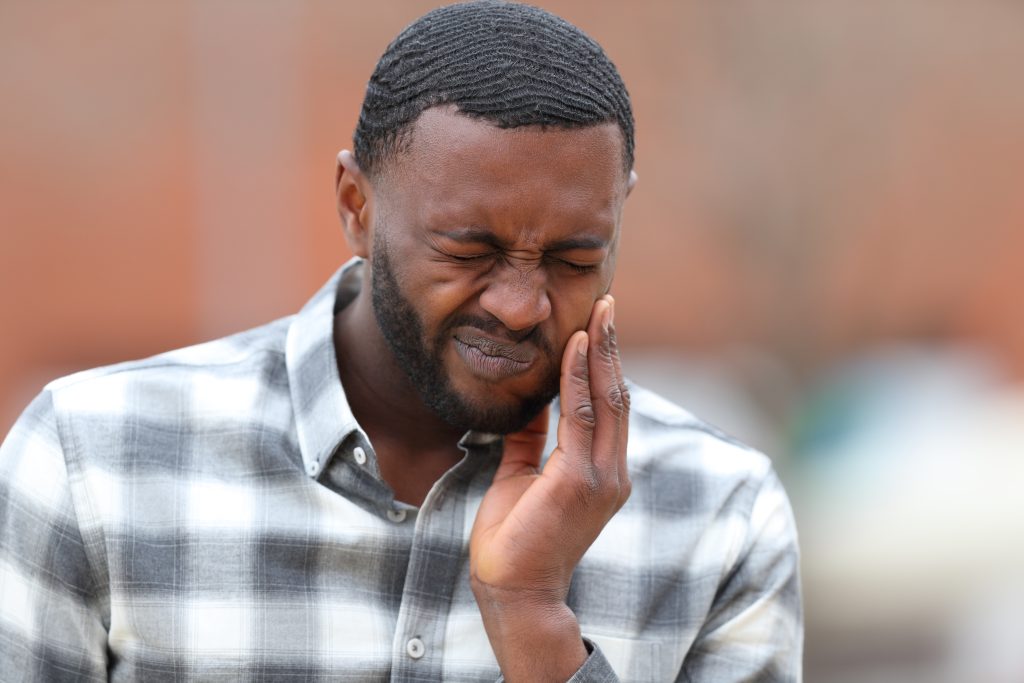
Few things are more frustrating than jaw pain that disrupts your daily life. When your jaw hurts on one side, simple activities like eating, talking, or even sleeping can become uncomfortable challenges. You might find yourself chewing awkwardly on the opposite side, speaking with a clenched jaw, and otherwise desperate for your jaw to heal.
Typically, jaw pain on one side often points to specific underlying issues that require time and rest to heal.
What causes jaw pain on only one side?
When you experience jaw pain that’s isolated to one side, it typically falls into two main categories: recent injury or chronic conditions that only affect one part of the jaw.
TMJ disorders
Temporomandibular joint (TMJ) disorders are among the leading causes of one-sided jaw pain. Your TMJ connects your jawbone to your skull, and when one jaw joint or the surrounding muscles become inflamed or misaligned, it will lead to pain and other symptoms, such as:
- Jaw popping and pain when opening or closing your mouth
- Clicking or grinding sounds
- Difficulty opening your mouth fully
- Muscle tension in the jaw, neck, and/or shoulders
These issues frequently develop gradually and may worsen during times of stress when you’re more likely to clench or grind your teeth.
Direct jaw injury
Physical trauma to the jaw area can result in localized pain that persists for days or even weeks. Common injuries include:
- Impact from sports activities or accidents
- Dental procedures that require prolonged mouth opening
- Yawning or stretching your mouth too wide
- Biting down awkwardly on hard foods
When it comes to jaw injuries, something important to remember is that you might not immediately recall injuring your jaw because pain can be delayed. That awkward bite into something harder than you expected, or the uncomfortably big yawn during yesterday’s meeting could be the source of today’s discomfort.
Dental and orthodontic issues
Problems with your teeth or bite alignment can create uneven pressure on one side of your jaw. These might include:
- Tooth decay or abscesses
- Uneven bite patterns
- Missing teeth on one side
- Poorly fitting dental work
Your dentist will be able to recommend a treatment if one of these is the source of your jaw pain.
Muscle imbalances and tension
Finally, chronic muscle tension or imbalances in your head, neck, and shoulder area can contribute to one-sided jaw pain. Poor posture, especially from prolonged computer work or phone use, often creates these imbalances.
Will one-sided jaw pain go away on its own?
The answer depends largely on what’s causing your jaw pain and how long you’ve been experiencing it.
If your jaw pain on one side resulted from a recent, minor injury, there’s a good chance it will improve on its own within a few days to a week. This is especially true for pain caused by:
- Overextending your jaw while yawning
- Biting down awkwardly on food
- Minor bumps or impacts
- Temporary muscle strain
The key is avoiding activities that might re-aggravate the area. Try eating softer foods, avoid extreme jaw movements, and give your jaw time to heal.
When to see a professional
However, if your jaw pain stems from an underlying chronic condition, waiting and hoping rarely leads to lasting relief. Chronic causes that typically require intervention include:
- TMJ disorders with ongoing muscle or joint dysfunction
- Dental problems requiring treatment
- Bite alignment issues
- Persistent muscle imbalances from poor posture or stress
Chronic conditions often worsen over time without proper treatment, potentially requiring more invasive or expensive treatment than when the issue is caught early on.
The best way to know whether your jaw pain on one side will resolve naturally is to get a professional evaluation by a physical therapist. The PTs at Rehab Access understand the complex anatomy of the head, neck, and jaw and can quickly identify whether you’re dealing with a temporary issue or something that needs ongoing care.
Why physical therapy can help with jaw pain
Physical therapy offers a particularly effective approach to treating one-sided jaw pain, because it’s an accessible first-line treatment method that is often highly effective on its own.
Quick assessment
Our physical therapists can typically schedule appointments much faster than many medical specialists. During your initial visit, they’ll conduct a thorough evaluation of your jaw mechanics, muscle tension patterns, and overall posture to identify the root cause of your pain – and whether you’ll be better off consulting another type of medical professional.
Quick, non-invasive treatment options
Physical therapy is founded on principles of helping the body heal itself. You’ll have both in-person treatments and at-home care guidelines to follow that don’t work immediately but do start providing relief quickly. Common techniques include:
- Manual therapy to release muscle tension
- Gentle joint mobilization
- Targeted exercises to improve jaw function
- Posture correction strategies
- Stress reduction techniques
Addressing the whole area
Physical therapists understand that jaw popping and pain often connects to issues nearby in your body. They’ll examine your neck posture, shoulder alignment, and overall movement patterns to address contributing factors you might not have considered.
Education and prevention
Beyond treating your current pain, physical therapy provides you with tools to prevent future episodes. You’ll learn proper jaw mechanics, stress management techniques, and exercises you can do at home to maintain your progress.
Start finding relief at Rehab Access Physical Therapy
If you’re tired of dealing with persistent jaw pain that’s affecting your quality of life, you don’t have to suffer in silence. Jaw pain on one side often responds well to targeted physical therapy treatment, and the sooner you address it, the better your outcomes are likely to be.
Our Physical Therapists at Rehab Access are here to help you achieve long-lasting relief from aches and pains like these. Start a conversation with our team by calling one of our New Orleans clinics or by requesting an appointment online today.